
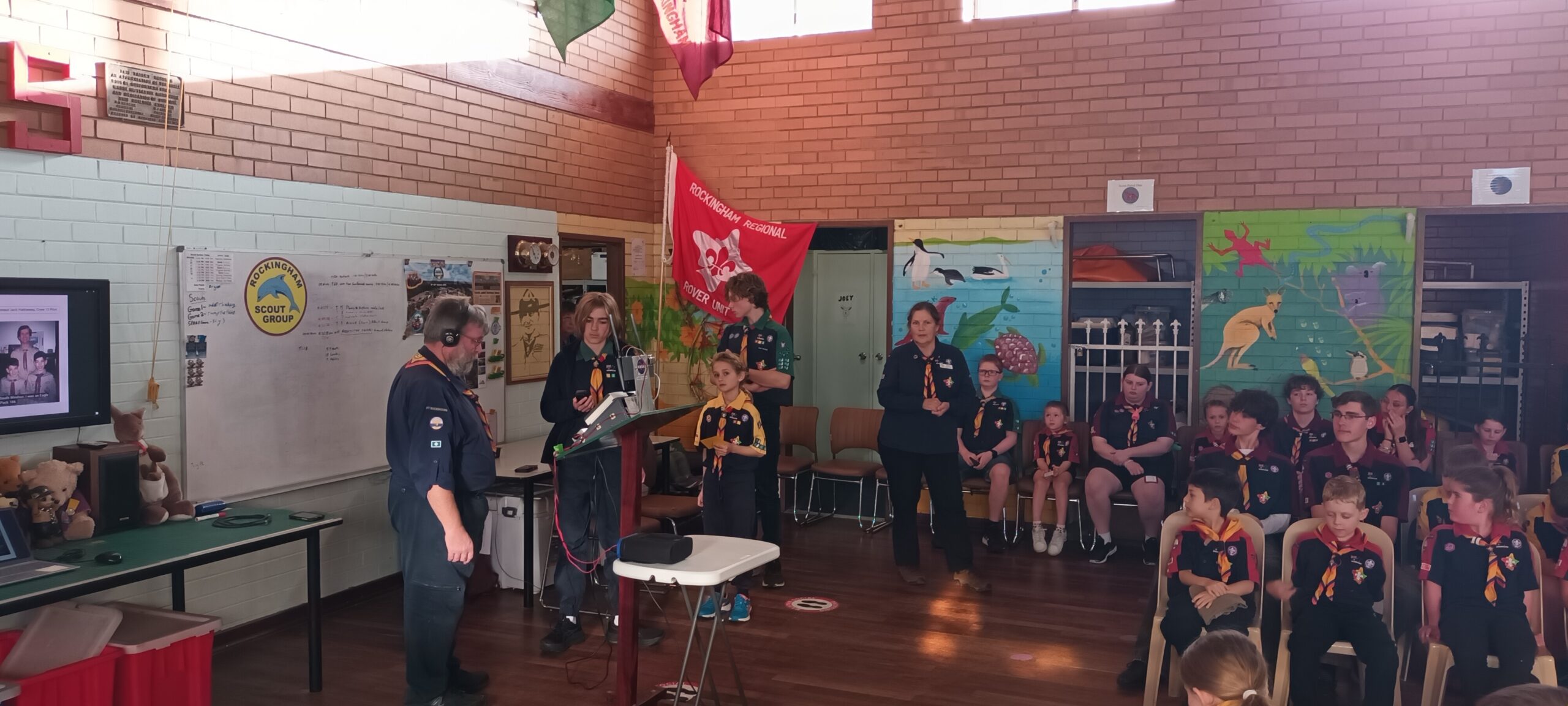
What happens to a seed after six months in space? For young people at Rockingham Scout Group, that question became a hands-on science project and an opportunity to speak with an astronaut.
Through the ‘Spacacia’ Seeds in Space initiative, Golden Wattle seeds that had travelled aboard the International Space Station (ISS) were compared with seeds that had remained on Earth. Coordinated by the One Giant Leap Australia Foundation in partnership with space agencies, this citizen science project explores how spaceflight might affect seed germination and early growth.
From 2 June to 22 August 2026, Cub Scout Leader Daniel Clark worked with Joey Scouts and Cub Scouts to test 12 seeds: six space-flown and six Earth-based controls. They carefully sanded and soaked the seeds before planting them in labelled trays and maintaining consistent growing conditions. Over the following weeks, they monitored and recorded germination, plant height, leaf growth and temperature.
The first lesson was patience. No seeds germinated within the initial 14 days. Then, on 1 July, a tiny space-flown seedling emerged from the first sign of life in the experiment.
By day 80, seven of the 12 seeds had sprouted: three space-flown and four Earth controls. The Earth seedlings generally grew taller and more consistently, while the space-flown seedlings showed greater variation. Importantly, the Group’s report noted that cool weather, early excess moisture, seed age, and the small sample size could also have affected the results. The observations raised interesting questions, rather than proving that spaceflight caused the differences.
The experience reached new heights on Saturday, 29 August, when Rockingham Scouts spoke with NASA astronaut Jack Hathaway aboard the ISS through Amateur Radio on the International Space Station (ARISS). Venturer Scout Alana helped coordinate questions, and Joey Scout Lucy had her question about growing plants in space answered. The Group also shared its experiment findings and showed members the developing ‘Spacacia’ seedlings.
From carefully recording results to speaking with an astronaut, the project brought science, teamwork and curiosity together. For Rockingham Scout Group’s young people, it was a reminder that even the smallest seed can inspire an extraordinary adventure.
Comments are closed